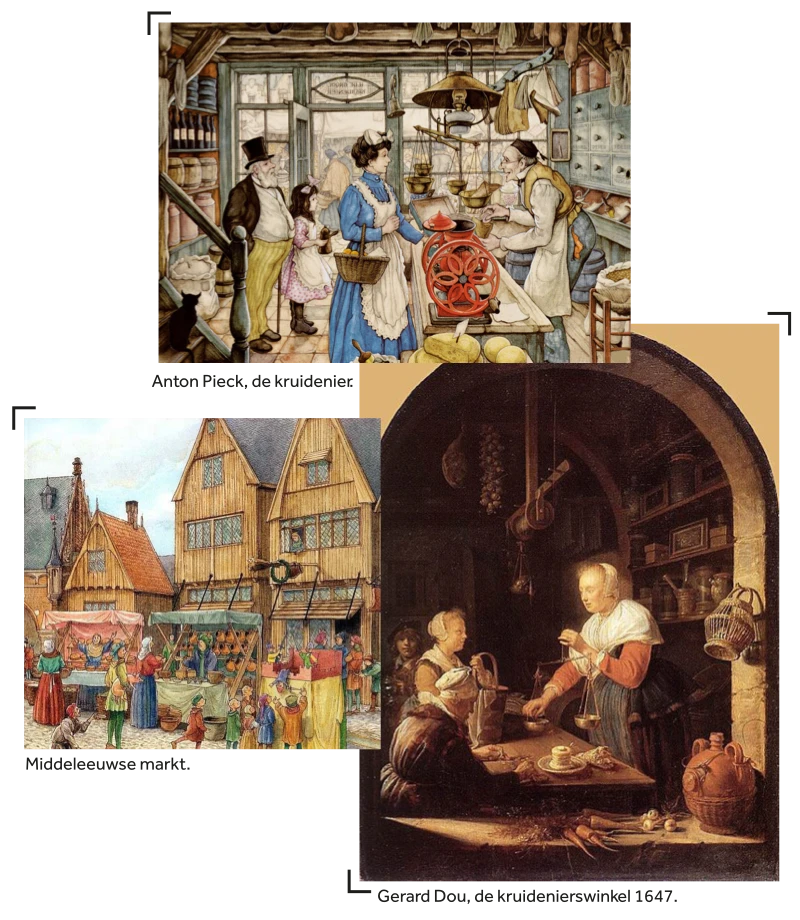
In the Middle Ages, there were already ‘grocers’ who travelled and sold at markets. With their herbs, they also acted as druggists and pharmacies . With the opening of the trade route to India, colonial goods were added. Traveling merchants were gradually replaced by permanent shops. From the Middle Ages until the end of the 18th century, grocers united in their own guild: the St. Nicholas Guild. During the French occupation in 1798, all guilds were abolished. This cleared the way for grocers to evolve into a more general food retail business.
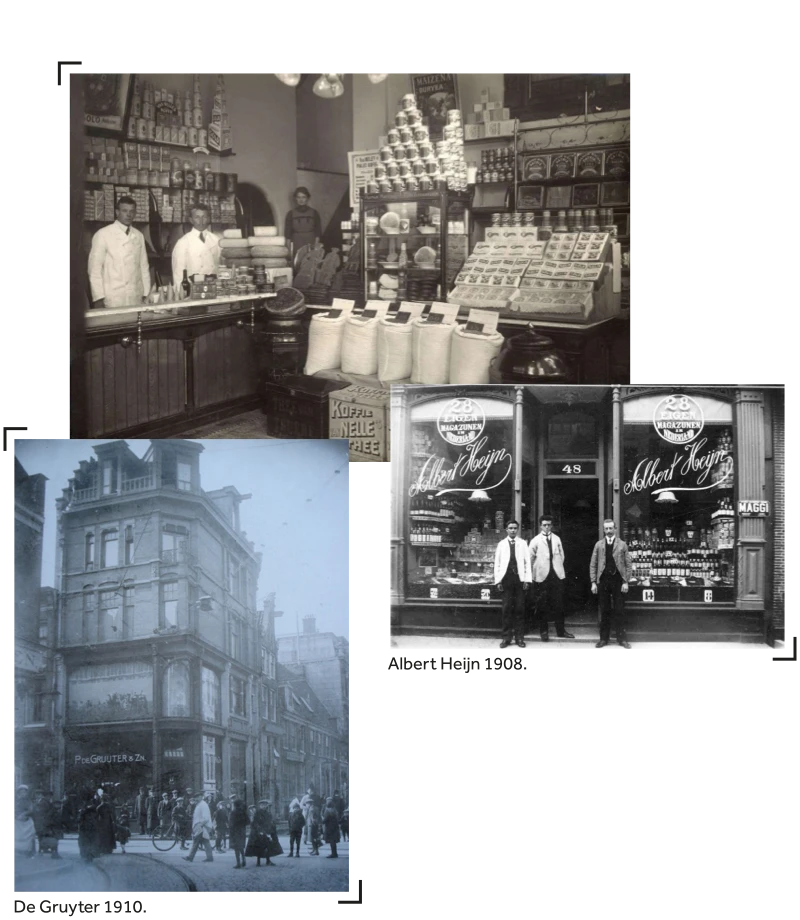
Grocers in the 19th century were small independent entrepreneurs. By the end of this century, major changes were on the horizon. Most importantly, branded products were born. As a result, many new products were introduced. Forward-thinking retailers started chain stores outside of wholesale operations: department store chains. The labour movement established cooperative consumer associations, where members could buy groceries at lower prices: co-op. Independent grocers started looking for new forms of cooperation, such as purchasing associations and voluntary chain stores.
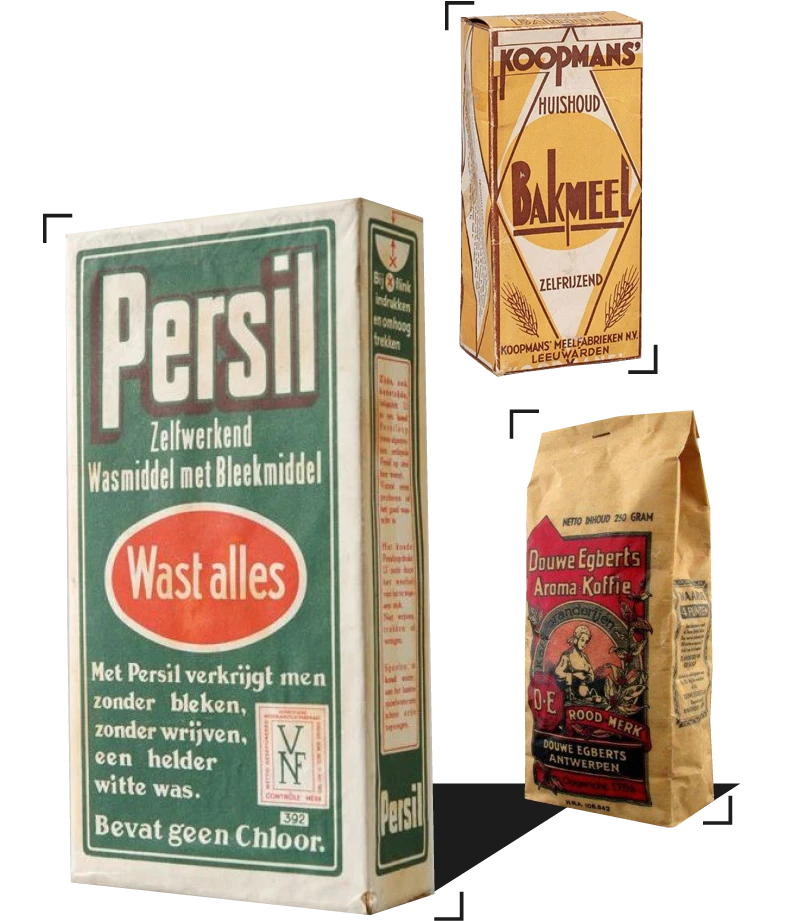
By the end of the 19th century, the range of products underwent significant changes as more and more factory-produced goods entered the market. These
included baby food, macaroni, cornstarch, custard, oatmeal, bouillon cubes, syrups, peanut butter, chocolate sprinkles, toothpaste, and soap.
In short, the prepackaged (branded) product was born. The grocery store definitively took on a new appearance. In addition to the ever-expanding product ranges, the presentation of the products and the decoration of the stores also began to play a role. After all, seeing leads to buying.
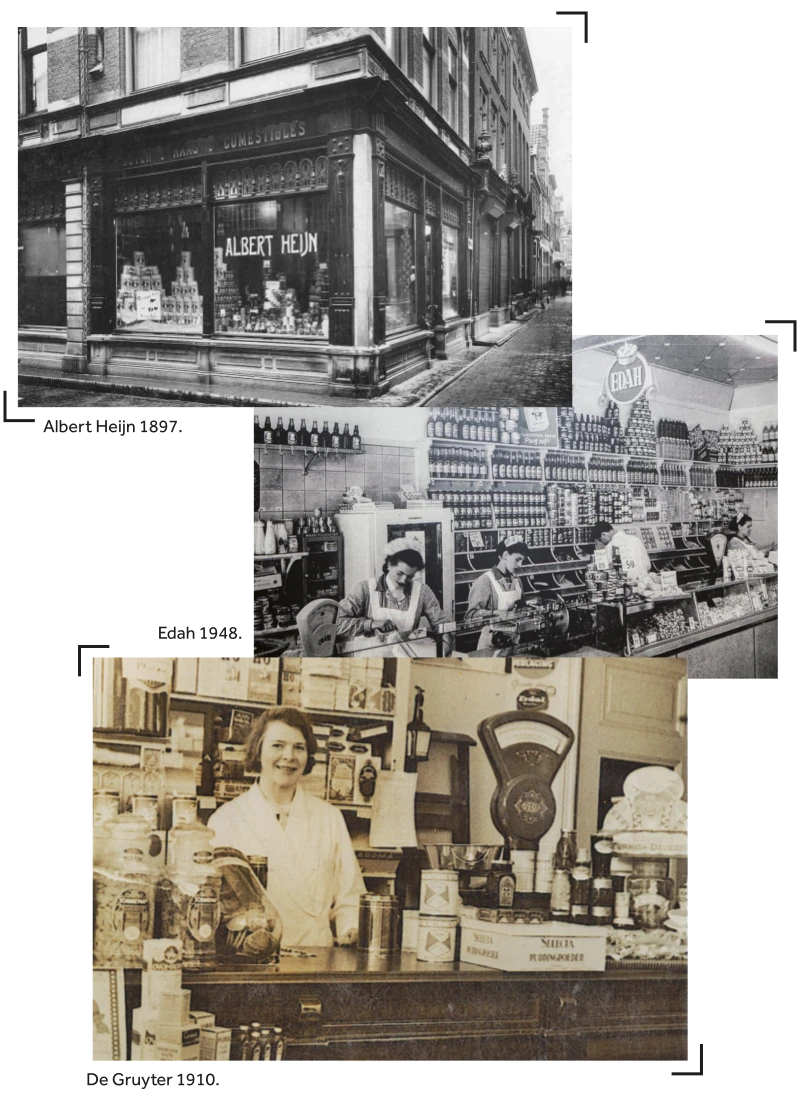
At the end of the 19th century, department store chains emerged. Famous names include De Gruyter, Simon de Wit, and Albert Heijn. These were major entrepreneurs with multiple branches who started purchasing and producing on their own. Private labels made their debut.
Albert Heijn, who started with a small 12 m² store in Oostzaan in 1887, had ten stores by 1902. De Gruyter’s decline took place in the 1960s because it missed the transition to modern supermarkets. By the late 1970s, the stores had gradually disappeared from the streets, as had Simon de Wit, which was taken over by Albert Heijn. Edah, founded in 1910, also had to close its doors in the early 21st century.
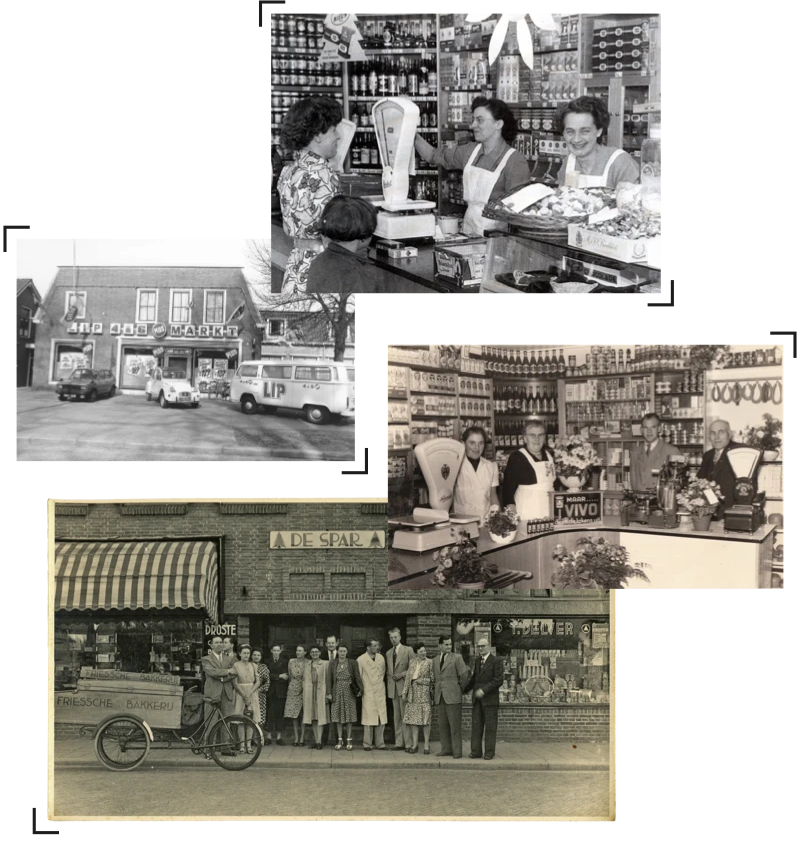
To buy goods more cheaply, independent shopkeepers also began to cooperate. Around 1900, the first retailer purchasing associations emerged. In 1928, several of these purchasing associations united in the Sperwer alliance. Others joined in. Since 2001, they have operated under the name Plus. Other grocers collaborated in voluntary chain stores. In 1932, in Zevenhuizen (ZH), Grossierderij Van Well founded the first voluntary chain store in the world: De Spar. In this organization, wholesalers and retailers worked together. Spar is now active in 49 countries. Other well-known chains included Centra, Vivo, Végé, A & O, and Kroon. One of the founders of Kroon in 1921 was Grossierderij Van Eerdt from Veghel, which is now the current owner of Jumbo.
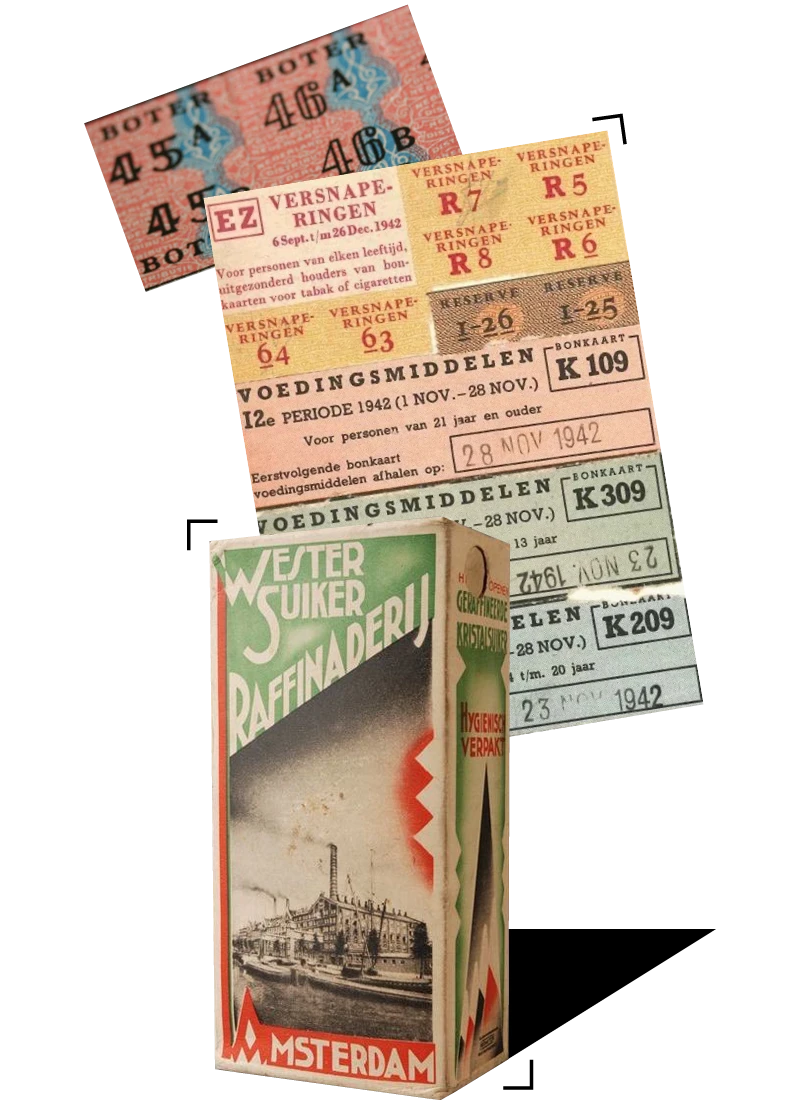
Under the threat of World War II, sugar was the first item to be rationed in 1939. During the occupation, more and more items were rationed, such as bread, butter, cheese, eggs, cookies, detergents, meat, flour, and tea. To purchase these products, one needed ration coupons. This gave grocers a lot of extra work. The coupons had to be checked, administered, pasted, and submitted to distribution offices. If everything was correct, they would receive new supplies. The increasing scarcity of products like coffee, tea, soap, and bread led to many substitute products. Coffee was the last item to come off rationing in 1952.
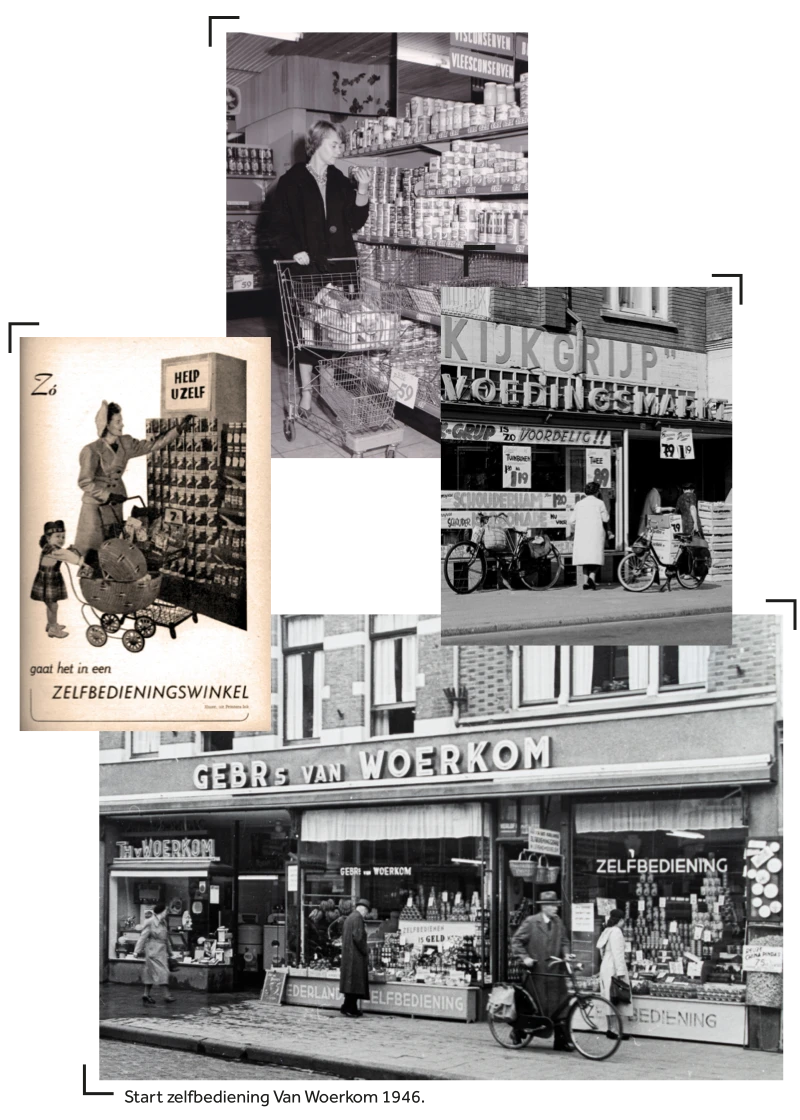
In 1948, entrepreneur Chris van Woerkom from Nijmegen was the first to adopt the self-service system developed in the U.S. The counter with scales and cash register, where groceries were weighed, packed, and paid for, was replaced by shelves with packaged items that customers had to put in their shopping baskets themselves.
It was feared that social contact would be lost because of this. After all, the grocer played an important social role and was generally well informed about everything happening in the neighbourhood. For that reason, many grocers were initially hesitant about self-service. Exceptions were entrepreneurs like Dirk van den Broek and Dirk Kat with Kijkgrijp, now Deka. In 1950, The Netherlands had more than 25,000 grocery stores.
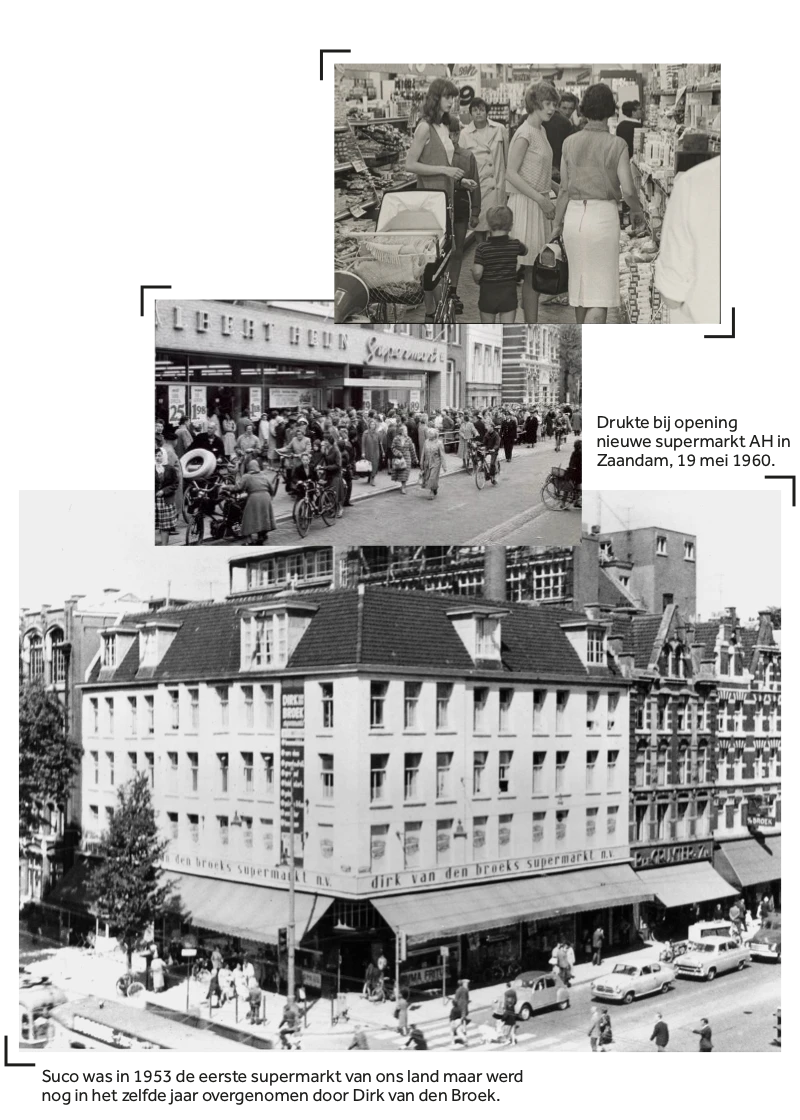
As product ranges grew, self-service stores evolved into supermarkets over the years. In addition to the usual ‘dry’ grocery products, one could also buy fresh food such as milk, bread, vegetables, fruit, and meat. For this, grocers had to obtain the required vocational diplomas. This requirement was lifted in 2007 with the repeal of the Establishment Act.
In the 1950s and 1960s, alongside Albert Heijn, progressive entrepreneurial families like Bastmeijer with Nettorama, Deen, Hoogvliet, Jan Linders, Poiesz, and Zwanenburg with Vomar opened supermarkets. By 1970, the Netherlands had 2,400 supermarkets out of a total of 12,100 stores. Aldi opened its first stores in the Netherlands in Rotterdam and Emmen in 1973. Lidl opened seven supermarkets in one day in 1997, including one in Uden.
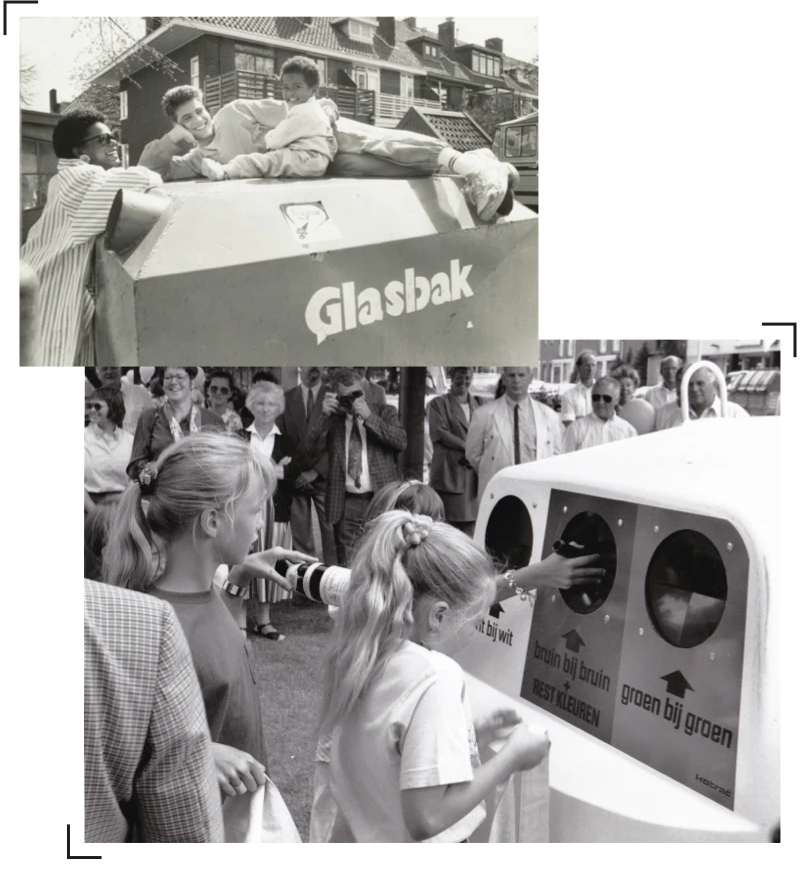
In 1972, the first open glass recycling container was placed at an Albert Heijn in Zeist. The Netherlands now has 25,000 glass containers, and they can be found at all supermarkets. As a result, 90% of all glass is collected. Supermarkets also collect their own paper, cardboard, and plastic.
Not only lighter packaging materials are used, but packaging materials are increasingly made from recycled material. Supermarkets also collect more than five billion PET bottles, cans, beer bottles, and crates with deposits every year.
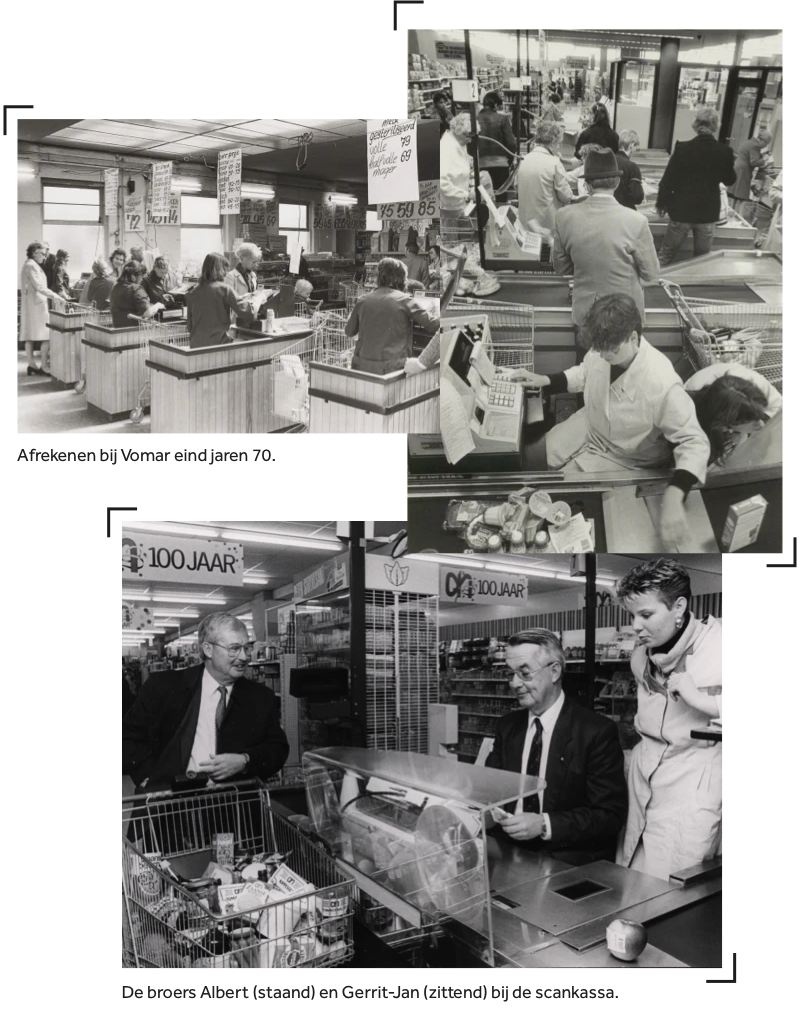
After the first grocer with a cash register in 1900 in Amsterdam, Albert Heijn introduced scanning in its branch in Heemskerk in 1976.
Since not all manufacturers had yet equipped their packaging with a barcode, stickers had to be applied. Self-scanning followed 30 years later. From 1985 onwards, debit card payments were possible. In 2013, supermarkets reached the milestone of one billion debit card transactions. This number has since doubled.
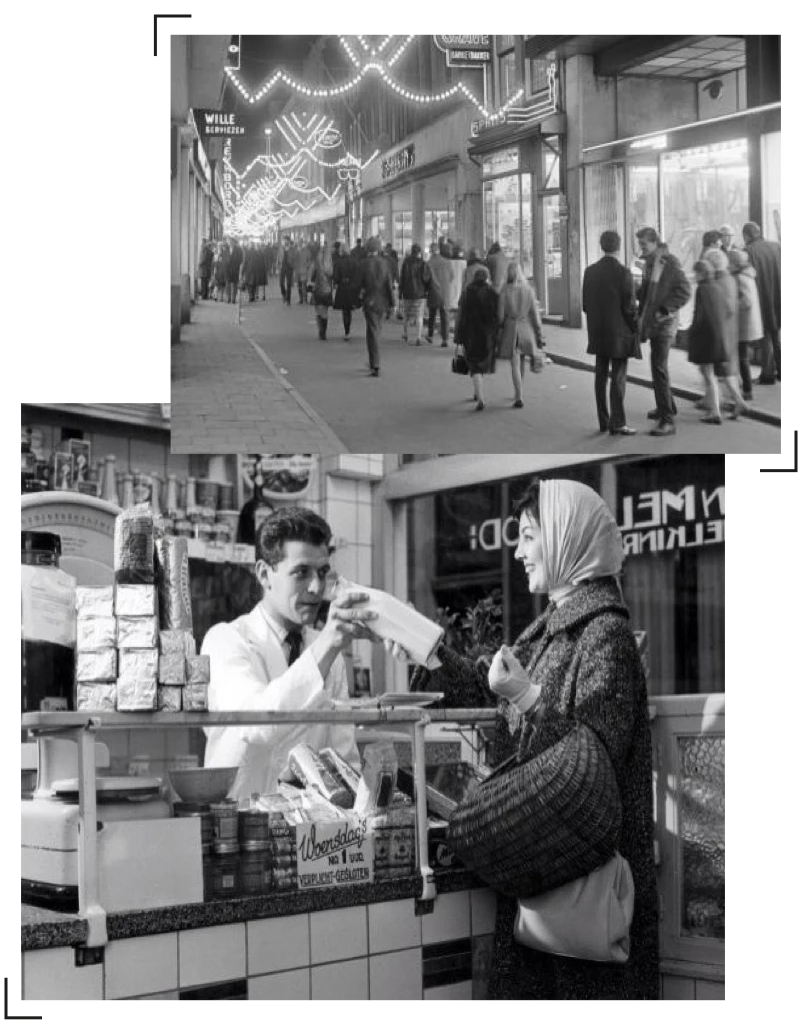
Since 1996, supermarkets have been allowed to stay open until 10:00 PM on weekdays. With municipal approval, they have also been able to open on Sundays since 2013.
This has met the growing consumer demand for extended opening hours. After earlier interim relaxations such as late-night shopping and Sunday shopping, this marked the definitive end of the legal restriction from 1951 that required stores to close at 6:00 PM on weekdays and remain closed on Sundays.
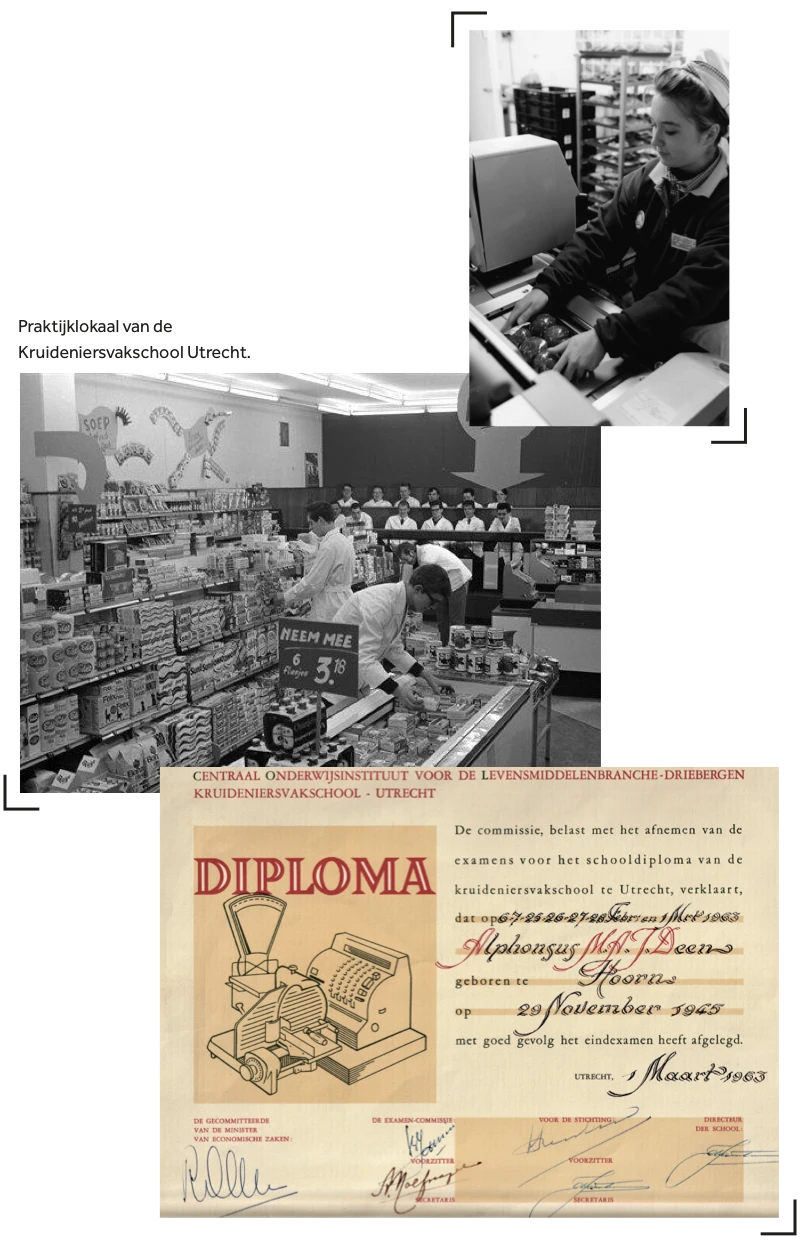
For many young people, working in a supermarket is their first experience in the job market. Due to the extended opening hours and flexible working hours, supermarkets are an attractive employer for many. The industry has had its own collective labour agreement since 1955.
Supermarkets also have their own vocational training programs. In 1947, the Grocers’ Trade School was opened in Utrecht. Including distribution centers, food service companies, and online home delivery, the industry employs 300,000 full-time and part-time workers. This makes the industry the largest employer in The Netherlands outranked only by the government as employer.